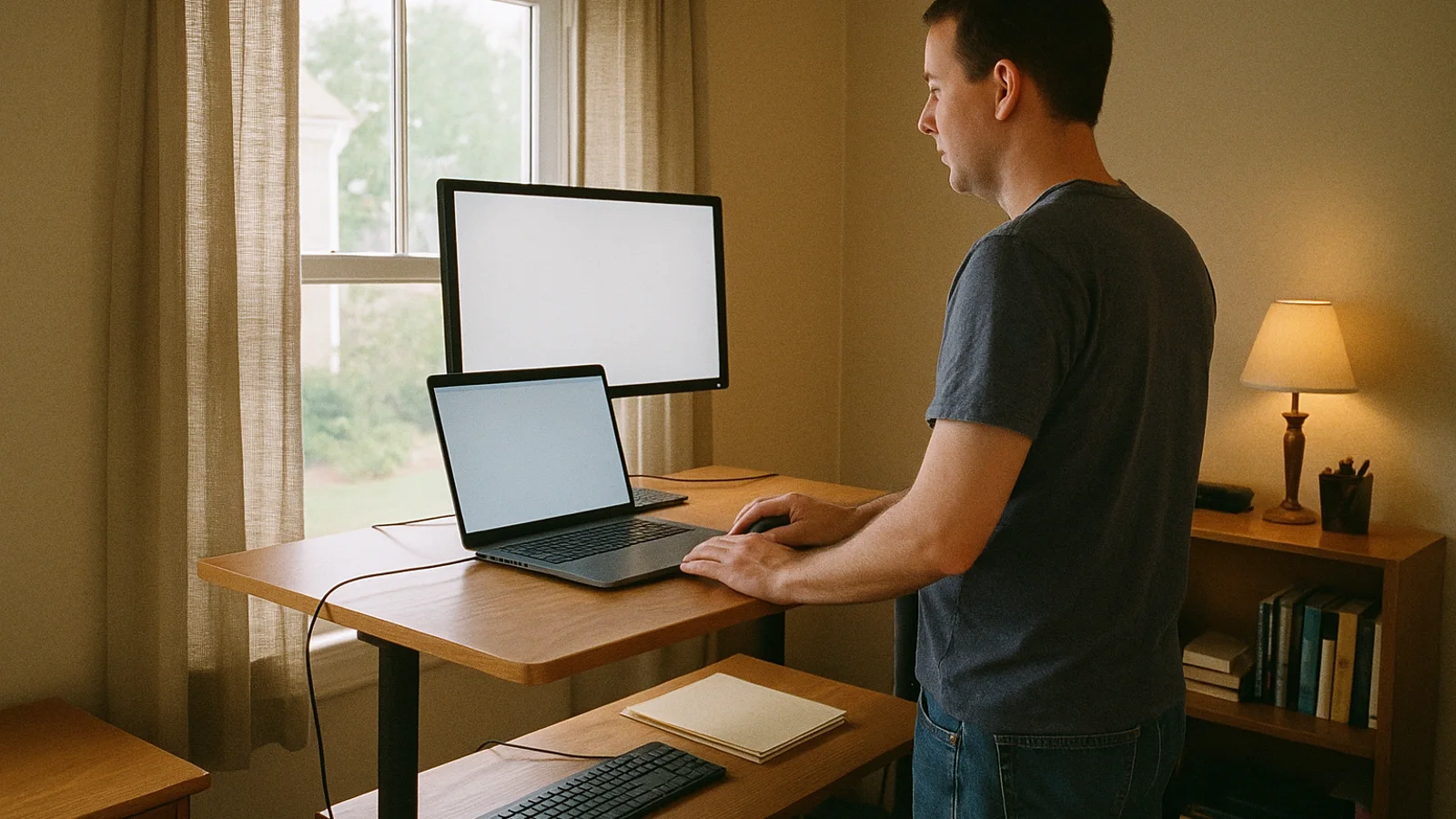
Standing desks are easy to over-shop because every product page talks about motors, memory buttons, and premium finishes. In a home office, the better question is simpler: will this desk make your workday easier in the room you actually have? This guide supports readers comparing options alongside LeStallion’s deeper roundup of standing desks for a home office.
Start with the room, not the motor
A desk that looks generous online can feel bulky when it has to share space with a bed, printer, laundry basket, or school supplies. Measure the walking lane, door swing, chair pullback, and where your monitor will sit. A lived-in home office rewards proportion more than showroom size.
Favor narrower tops, rounded corners, and cable routes that do not demand wall clearance.
Choose calmer finishes and quiet controls if the desk sits in a bedroom or family space.
Use the extra space for monitor arms, task lighting, and a better mat, not only a larger top.
Stability beats gimmicks
For typing, video calls, and a monitor arm, stability matters more than an extra preset button. A steady frame, sensible height range, and return policy make a better daily desk than a long list of features you rarely touch.
A standing desk should feel boring in the best way: it rises, settles, holds your gear, and lets you get back to work.
Common home-office mistakes
- Buying a top that blocks natural movement through the room.
- Ignoring minimum height, especially for shorter users seated in a normal chair.
- Planning for standing only, instead of a sit-stand rhythm.
- Forgetting cable slack before raising the desk.
- Assuming a heavy frame fixes a poor monitor setup.
A practical buying framework
| Need | What to check |
|---|---|
| Ergonomics | Height range, keyboard height, monitor eye line |
| Apartment use | Noise, footprint, rounded edges |
| Long workdays | Stability, warranty, accessory compatibility |
For a broader product-by-product shortlist, compare these notes with LeStallion’s home-office standing desk recommendations and then narrow by your room constraints.
FAQ
Is a standing desk worth it for home work?
It can be, if you use it to vary posture rather than stand all day.
What size is best?
The best size is the smallest surface that still fits your monitor, keyboard, notes, and movement.
Do dual motors matter?
They can help with heavier setups, but frame quality and stability still matter.
What accessory should come first?
Usually a monitor riser or arm, because screen position shapes posture quickly.
How should I compare desks?
Compare height range, stability, room fit, return policy, and the real items you keep on your desk.